Pressure, Not Pumps: The Shift in LNG Tank Design
For decades an LNG tank meant extraction pumps and bottom penetrations. GreenER™ Technology removes both, and it is already running at a utility and loaded on a train for another. What is changing and why buyers are paying attention.
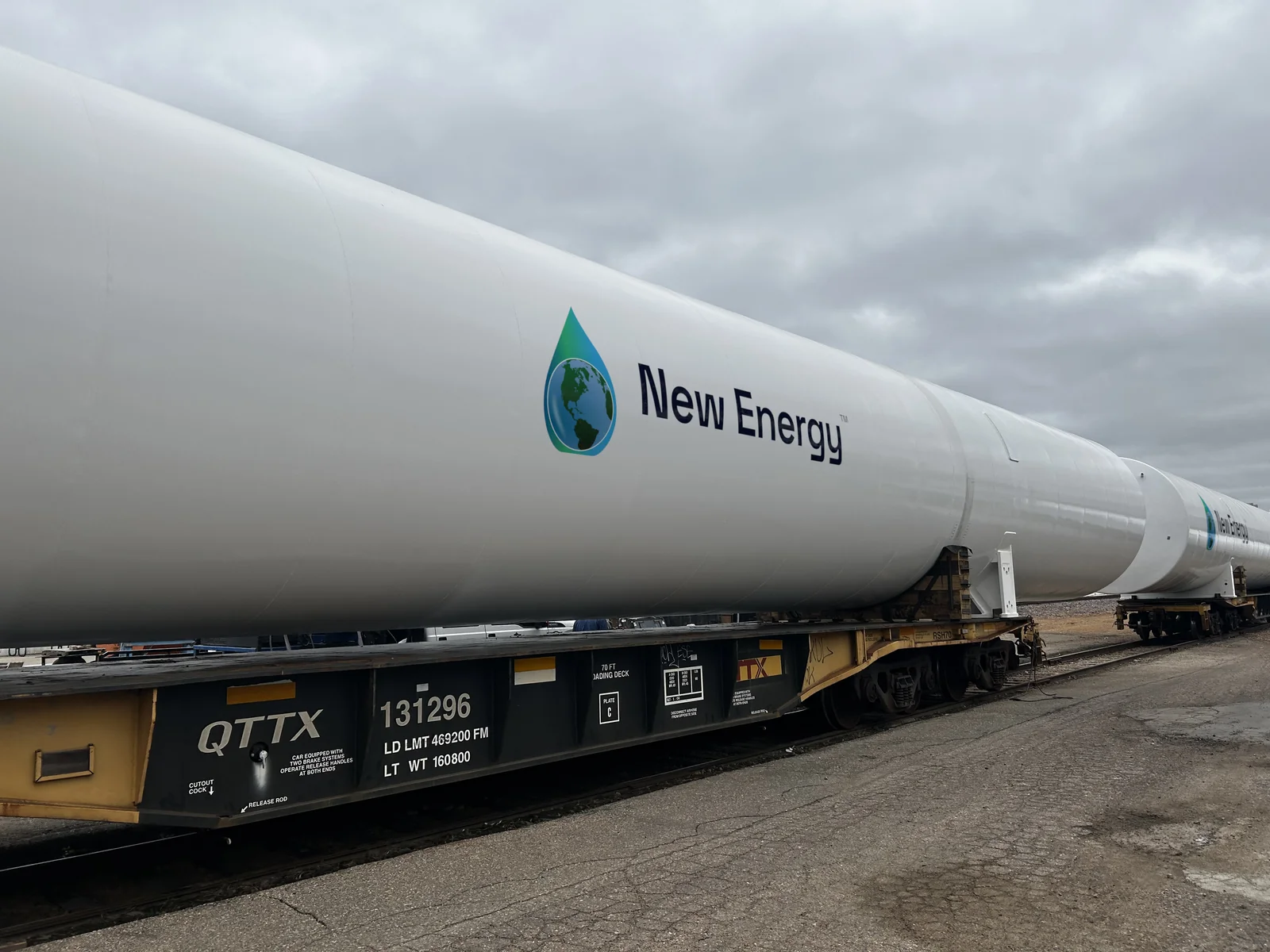
For most of the LNG industry’s history, a storage tank came with two things nobody questioned: an extraction pump to move the liquid out, and penetrations through the bottom of the tank to get it there. Every design review, every containment plan and every maintenance budget was built around them.
GreenER™ Technology (U.S. Patent No. 12,455,047 B2) takes both away. That is the change, and it is no longer on paper.
What a conventional LNG tank asks of its owner
A conventional cryogenic storage system pulls liquid out with a submerged or separate pump in the cold zone. The pump needs cryogenic seals, bearings, a motor, starters, VFDs, cabling and backup power, and usually a second pump standing by in case the first one is down. Extraction pumps are among the most maintenance-heavy parts of an LNG plant.
The bottom penetrations carry their own cost. A connection through the bottom of the tank is the path a leak would take, so the site needs the impoundment, sumps and civil work to contain a full-volume spill.
What GreenER™ Technology does instead
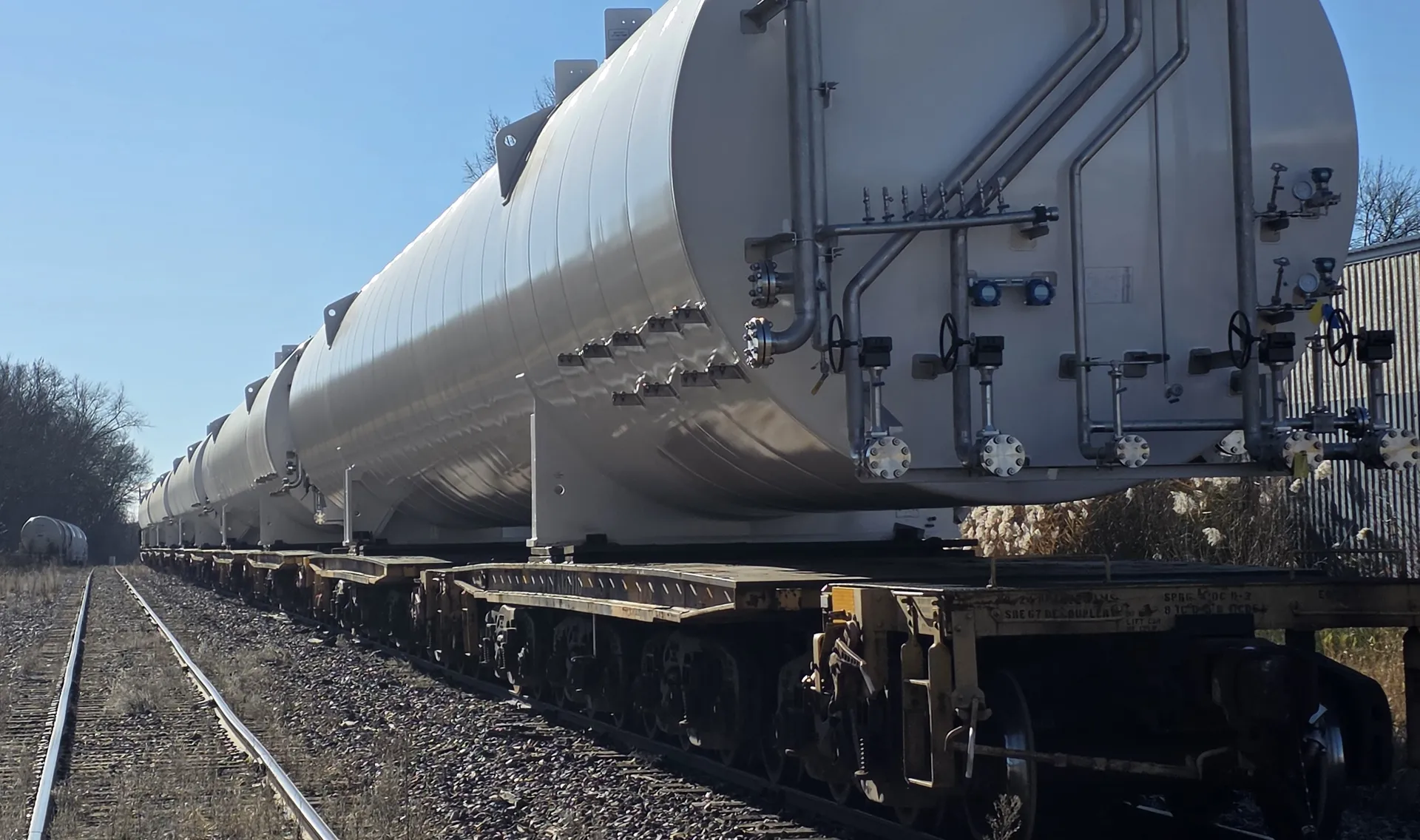
A single pressure-build tank and vaporizers hold vapor pressure across the storage tanks, and that pressure moves the liquid. No pump sits in the withdrawal path. Every nozzle comes through the top of the tank, so nothing passes through the bottom.
The result is a shorter list of things that can fail, less electrical equipment, lower parasitic power during sendout, and a smaller containment footprint. Tanks are built in a factory and shipped finished by rail or barge, and total system fabrication time can be as early as 9 months.
It is running, and it is shipping
At Greenville Utilities, two of six 77,000-gallon tanks and the GreenER™ pressurization system are in commercial operation, moving LNG by pressure with no in-tank pumps.
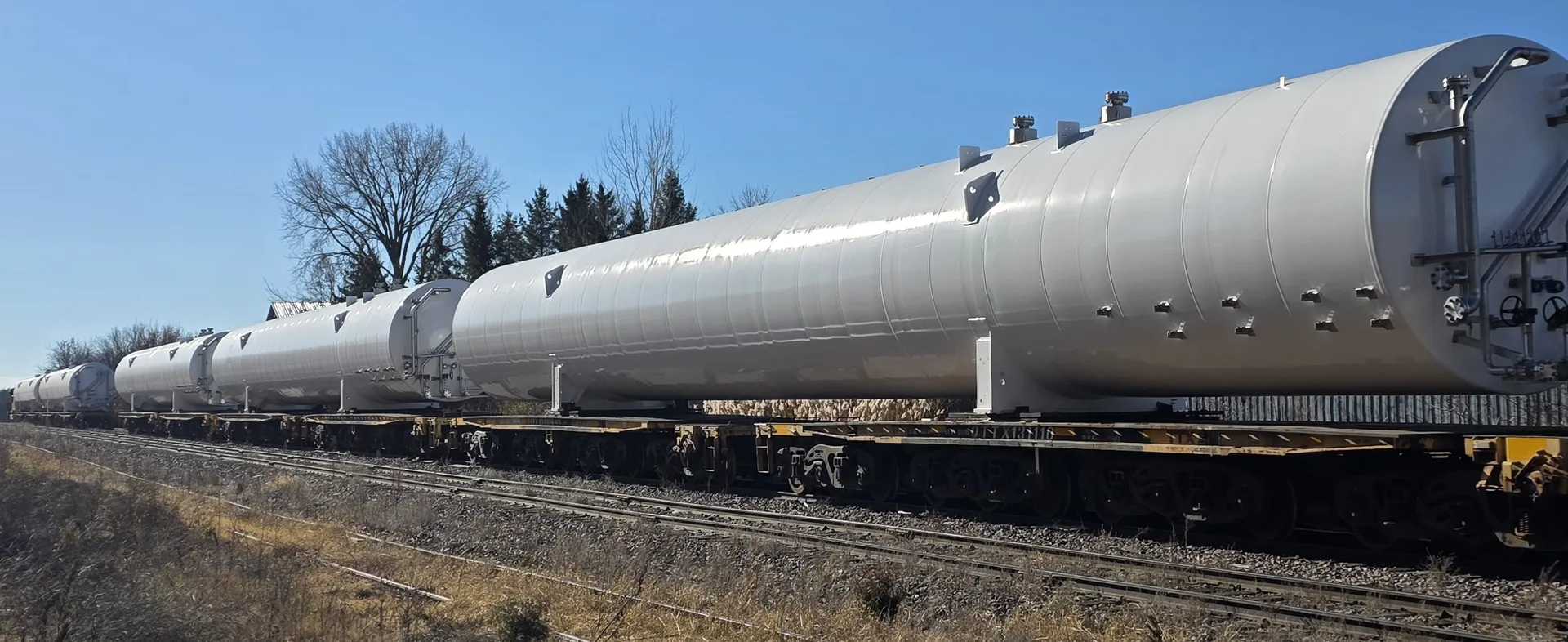
A second order is further along the road, literally. Five GreenER™ tanks, 77,000 gallons each, are loaded on one train for a utility customer in the Southeast. To our knowledge, five LNG storage tanks of this size have never traveled together on a single train before, and it may be the largest single rail shipment of LNG storage tankage ever, though that has not been confirmed.
More than one shop can build it
New Energy Development Company licenses GreenER™ Technology to qualified fabricators and EPC contractors. Chart Industries built the five tanks on that train and is one of the approved GreenER™ Technology fabrication partners. It is not the only one, and the number is growing. For a buyer, that means competition on price and schedule, and no single shop standing between a project and its delivery date.
Why buyers outside utilities are calling
The same design family stores liquid oxygen, liquid nitrogen, liquid hydrogen and liquid methane, with oxygen in an oxygen-service configuration. That has opened conversations well beyond peak shaving: industrial gas, data centers, marine fueling and launch sites, where moving propellant without pumps takes a whole category of launch-day failures off the table.
If you are planning storage now
If a project has storage in its next budget cycle, the questions worth asking a tank vendor have changed:
- What moves the liquid out, and what happens to sendout if that equipment is down?
- How many connections pass through the bottom of the tank, and what containment does that require?
- How many shops can build this design, and how long is the fabrication queue?
Talk to our team about a specific site, or see how the technology works.