GreenER™ Bullet Tanks: No Pumps, No Bottom Penetrations
Four documented design changes that alter the permitting and cost maths on peak-shaving LNG projects.
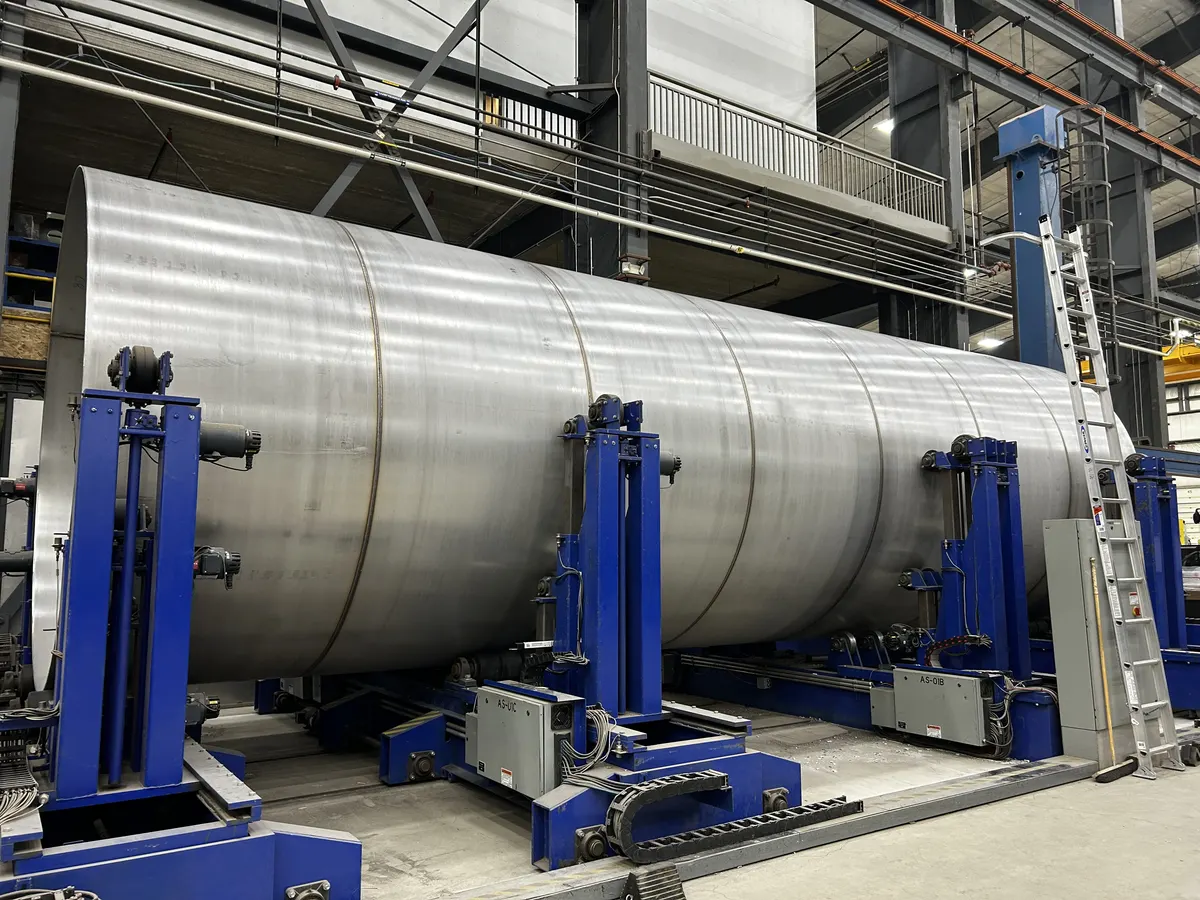
The GreenER™ LNG storage and pressurization system (US Patent 12,455,047 B2, awarded 11-2025) is a cryogenic tank design built around four engineering choices that show up clearly on every peak-shaving LNG project we touch. The provisional patent for the flat-bottom variant (Provisional Patent 63/991359) extends the same approach to larger formats.
This post walks through those four documented improvements and how they line up with the standards that govern LNG facility design and siting.
The four documented GreenER™ improvements
According to the patented design specification, GreenER™ tanks ship with these structural advantages compared to traditional peak-shaving LNG storage:
- No bottom penetrations: the inner containment is not pierced through the floor.
- No extraction pumps: there is no submerged cryogenic pump inside the cold zone.
- Reduced civil work footprint: the simpler external piping and pressure-build approach reduces site complexity.
- Native path for most cryogenic molecules: the design is engineered for additive deployment of e-Methane (e-NG), hydrogen, nitrogen, and propane alongside LNG on the same pad, without retrofit.
The motive force for moving LNG out of the tank to vaporizers comes from a simple pressure-build system, not from an extraction pump. That single architectural decision is what enables the no-bottom-penetration and no-extraction-pump outcomes.
How this lines up with industry standards
GreenER™ designs are built to align with the standards every LNG project gets measured against:
- 49 CFR 193: the federal LNG facility safety standard.
- API 620: the design rule for low-pressure, low-temperature storage tanks (the spec that governs LNG bullet tanks and LNG flat bottom tanks at this scale).
- API 610: the spec for centrifugal pumps used in petroleum, petrochemical, and natural gas industries; relevant where pumps are used downstream of the tank in a GreenER™ installation.
The “no extraction pump” choice doesn’t mean pumps disappear from the facility. It means pumps live where they’re easier to inspect and maintain. API 610 compliant cryogenic and LNG pumps can be used downstream of vaporization or in transfer applications such as LNG truck loading and LNG fueling station bunker transfer.
What the design enables, segment by segment
The same patented GreenER™ tank serves four buyer segments. Documented and visible on the site:
- Utilities: peak-shaving LNG with a smaller required footprint and lower-cost build. Two utilities have ordered the full system; others are finalizing orders.
- Marine: cryogenic storage in a smaller footprint, engineered to meet stringent LNG regulatory exclusion zones for marine cryogenic, bunkering, and constrained terminal builds.
- EPCs: modular, pre-engineered, repeatable scope. License GreenER™ Technology once and deploy it forever.
- Power & Data Centers: combined-site, smaller footprint, just-in-time deployment. Firm fuel for combined-cycle generation and behind-the-meter data center power without waiting in the interconnect queue.
The same tank also supports add-on LNG, LDC LNG tanks, utility LNG tanks, virtual pipeline LNG, ISO container LNG, small-scale LNG, and stranded gas monetization applications across the value chain.
What’s already in the field
The Greenville Utilities project has 2 of 6 80,000-gallon GreenER™ LNG tanks plus the pressurization system in commercial operation post-COD. The tanks were fabricated by Chart Industries, a $6 billion strategic partner, and the project is delivering meaningful O&M and infrastructure savings compared with traditional designs.
What this means for project planning
If you’re evaluating peak-shaving LNG, marine LNG bunkering, data center LNG, utility LNG tanks, LDC LNG tanks, or any cryogenic gas and liquid molecule handling project where 49 CFR 193 permitting is on the critical path, the GreenER™ design is worth a conversation.
Next steps: