Sizing an LNG Peak Shaver to Your Design Day: Send-Out, Inventory and Refill
An LNG peak shaver is sized by three numbers that all come from the utility's design day: how fast it can send out gas, how many gallons it holds, and how quickly it can refill before the next cold snap.
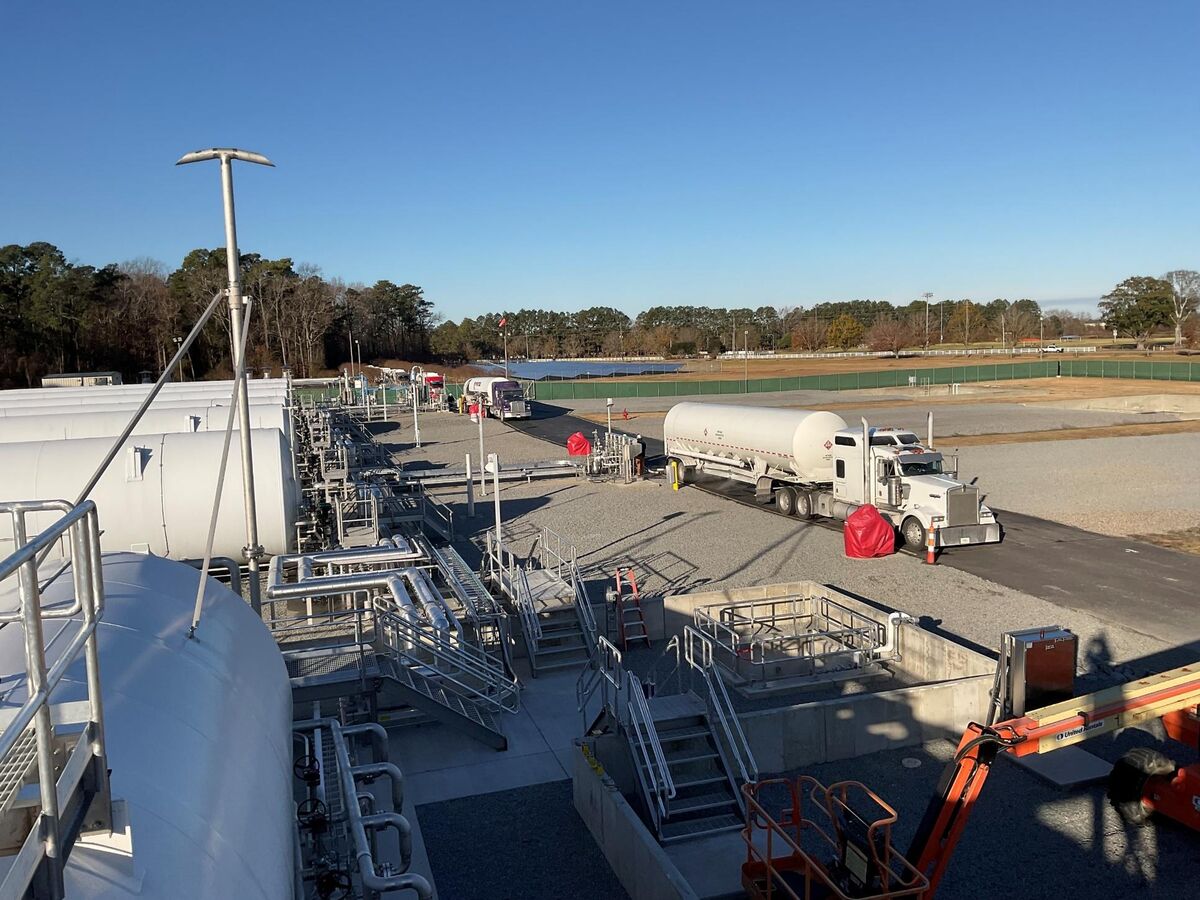
An LNG peak shaver is sized by three numbers, and the design day sets all three. The first is send-out rate: how much gas the vaporizers have to put into the system in the peak hour of the design day. The second is inventory: how many gallons the tank has to hold to keep that rate up for as long as the cold lasts. The third is refill: how fast the plant can put that inventory back before it is needed again. Get any one of them wrong and the other two don’t help much on the morning it counts.
The engineering runs in that same order. What follows is how each number gets set, where sizing tends to go wrong, and when to bring in outside help.
Start with the gap, not the load
The design-day number comes from the utility’s own supply plan. It is the system’s forecast demand on the extreme-cold day the utility plans around. A peak shaver does not serve that whole load. It serves the slice that firm pipeline supply and the utility’s other resources cannot cover. Our peak-shaving primer explains why that slice exists, and the pipeline capacity comparison covers how a utility decides that storage is the right way to fill it.
So the first sizing input is a gap, not a total: design-day demand minus the supply that can be counted on, measured where the shortfall actually shows up. A system can run short in one part of the network and be fine everywhere else. That is why the tie-in location belongs in the sizing work from the start.
Number one: send-out rate
Vaporizer capacity is sized to the peak hour of the design day, not the daily average. A peak shaver is built for deliverability. If the gap is steep for four morning hours and shallow the rest of the day, the vaporizer train has to cover the steep part, and the shallow hours look after themselves.
Two cautions apply. Permitted send-out and physical send-out are not always the same figure, and the lower one governs. And the system that moves liquid out of the tank has to keep pace with the vaporizers. On a pump-fed tank, that is the pump. On a pressure-build tank like the GreenER™ design, it is the controlled vapor-pressure differential that pushes LNG out, and it has to be designed to hold the full design-day rate for the full duration.
Number two: inventory
Storage is rate times duration, plus margin. Duration is the hard part. A design day is one day. A cold snap can run several, and the plant has to keep sending out on the third morning as well as the first. How long a stretch to plan for is the utility’s own call; the arithmetic works the same either way. On top of the send-out volume sit boil-off between the last fill and the first cold day, and the heel the tank holds back rather than delivers.
LNG keeps the volume manageable. Liquefaction shrinks natural gas roughly 600 to 1, which is why a few tanks on a few acres can hold a meaningful share of a winter peak.
Inventory also shapes the site. Under 49 CFR 193.2181, an impounding system serving one tank must hold 110 percent of that tank’s maximum liquid capacity, and one serving several tanks must hold the greater of all of them combined or 110 percent of the largest. Section 193.2067 lets shop-fabricated containers of 70,000 gallons or less use the wind loads in ASCE 7, while every other LNG facility designs to a sustained 150 miles per hour unless PHMSA accepts lower local data. Tank size is a design-basis decision as much as a storage one. A tank design that eliminates or greatly reduces the impoundment changes the first of those calculations, which our siting article walks through.
Tank count matters too. Several shop-fabricated tanks let inventory grow in steps. At the Greenville Utilities project, two of six 77,000-gallon tanks plus the pressurization system are in commercial operation, with the rest of the build planned around them.
Number three: refill
A peak-shaving liquefier is small on purpose. It fills storage slowly over the mild months rather than in a week. The Energy Information Administration marks the gas industry’s refill season as April 1 through October 31, and a peak shaver’s fill curve follows the same calendar.
The refill test has two parts. First, can the liquefier rebuild full inventory between one winter and the next, after boil-off and with an allowance for its own downtime? Second, what happens if a December cold snap draws the tank down by half? A liquefier sized only for the summer fill may not recover that inventory before February. Some plants close the gap with truck deliveries, which brings its own requirements: a road a cryogenic trailer can use in January, and transfer hoses that section 193.2621 requires to be pressure tested every calendar year and visually inspected before each use.
Where sizing goes wrong
- Sizing to today’s design day. Load moves. The primer covers how electrification and data center demand can make a utility’s peak sharper rather than flatter. Leaving room on the pad and inside the exclusion zones for the next tank costs little up front. Under section 193.2005, adding capacity later brings the siting rules to the new tank.
- Sizing storage without running the refill test. A full tank in November is only half the job.
- Sizing vaporizers to the daily average. The peak hour is the constraint.
- Treating the number as permanent. The supply picture behind the gap changes, and a sizing study from five years ago may rest on assumptions that no longer hold.
When to bring us in
Before the RFP goes out, while the three numbers are still open. A design-day forecast, the firm supply the utility can count on, and the point on the system where the shortfall shows up are enough to start. Feasibility and siting studies, regulatory support and owner’s engineer work are all part of our LNG development scope. Sign up for a Lunch & Learn or reach out directly.