Siting a Peak-Shaving LNG Facility: What Actually Sets the Footprint
The federal rules that decide how much land a peak-shaving LNG facility needs, the two exclusion zones behind them, and what to check on a parcel before anyone buys it.
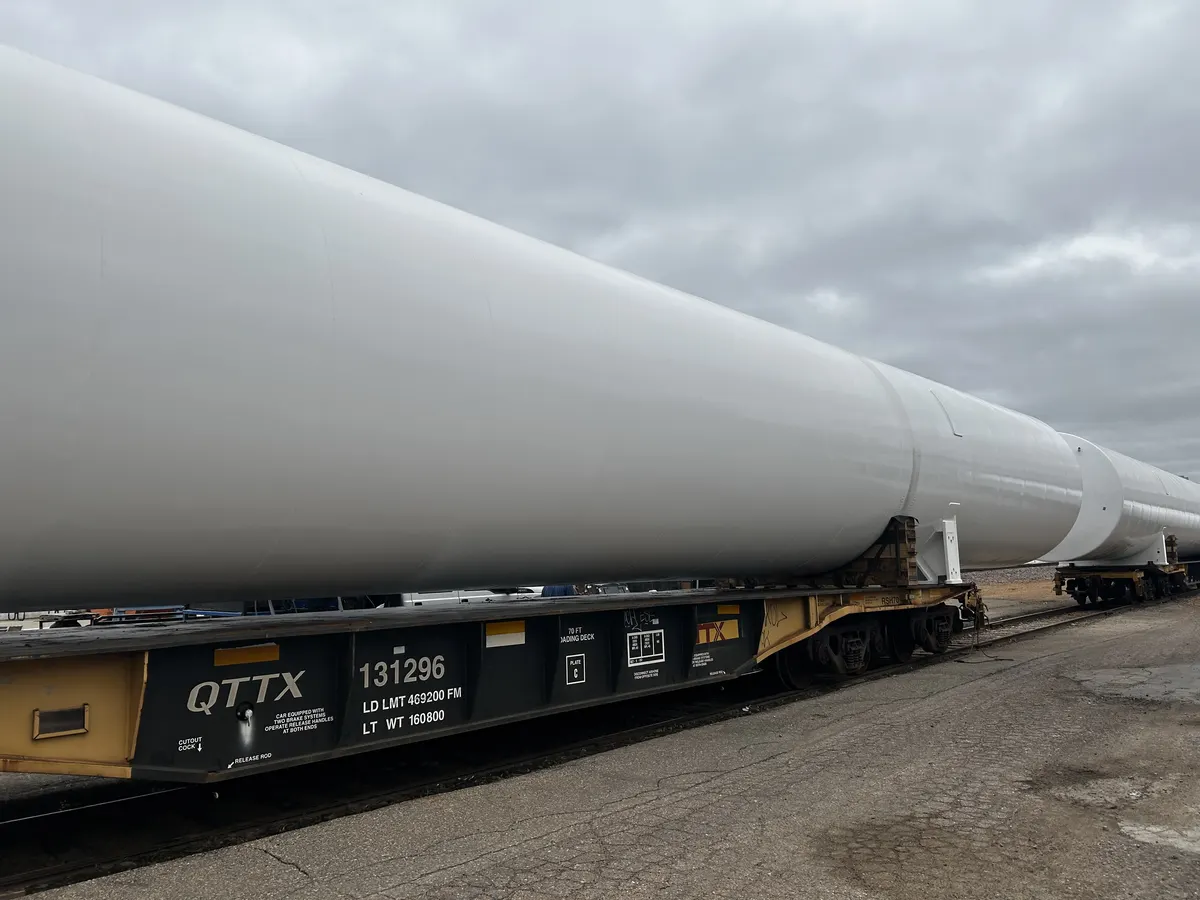
The footprint of a peak-shaving LNG facility is set by two circles drawn around the tank, not by the tank itself. Federal rule 49 CFR 193 requires every LNG container and transfer system to sit inside a thermal exclusion zone and a flammable vapor exclusion zone, both calculated with the rule’s own models and weather assumptions, and both measured against the property line. Everything else about site selection matters, from pipeline access to power to neighbors, but those two zones decide whether a parcel works at all.
Here is how the zones are set, what shrinks them, and what to check on a candidate site before money is spent on it.
Zone one: thermal radiation
Section 193.2057 requires a thermal exclusion zone for each LNG container, sized per NFPA 59A. The model answers one question: how far would heat from a credible fire over the impoundment reach at a given intensity? NFPA 59A sets four intensity limits, and our regulatory overview lists them. They are 600, 1,600, 3,000 and 10,000 Btu per hour per square foot, each tied to a different boundary: the property line for a process design spill, an outdoor assembly area for 50 or more people, an occupied building outside the property line, and the property line for a fire over the impoundment.
The rule fixes the calculation. Distances come from the LNGFIRE3 model or an approved equivalent, and the weather inputs are the wind speed, temperature and humidity that produce the longest distance, excluding only conditions that occur less than 5 percent of the time on the local record. A site with a windy winter gets a bigger circle.
Zone two: vapor dispersion
Section 193.2059 requires a second zone for flammable vapor. LNG vapor is cold and dense. It stays near the ground and moves horizontally before it disperses, which is why the vapor zone is usually the binding constraint and often reaches farther than the thermal one.
This calculation is fixed too. Dispersion distance is modeled with DEGADIS, FEM3A, or an approved alternative, out to the point where the average methane concentration in air falls to 2.5 percent. That is half the lower flammable limit of about 5 percent, so the zone ends well before the cloud could actually burn. The weather assumptions are stacked against the site: either the conditions that give the longest downwind distance at least 90 percent of the time, or Pasquill stability class F with a 4.5 mile per hour wind, 50 percent humidity, a receptor height of half a meter and a surface roughness of 0.03 meters. The spill the model grows from, the design spill, is set by NFPA 59A.
Two items there deserve a second read. The surface roughness value assumes nearly bare ground, and a higher value is allowed only where dense vegetation upwind and downwind can be demonstrated. And the design spill is the seed of the whole calculation, which is why the tank design matters as much as the parcel does.
What shrinks the zones
Both zones grow from the credible release. A full-containment tank with no bottom penetrations removes the pipe-through-the-wall failure that a bottom-connected tank has to model, and a pressure-build system means no extraction pumps below the liquid level. That is the GreenER™ design: a smaller source term, so both contours pull in on the same property line. The design also eliminates or greatly reduces the impoundment basin, and the impoundment is where the thermal fire case is modeled. The outcome on a bullet-tank deployment is a smaller pad, smaller exclusion zones, less concrete, and fewer permits.
One caution. Actual contours vary by project, and PHMSA requires site-specific modeling on every facility. A smaller zone is an engineered outcome that gets demonstrated for each site, never a default anyone should assume.
The rest of the checklist
The zones are the gate. Once a parcel clears them, these decide whether the plant is easy or hard to build and run:
- Impoundment capacity. Where an impounding system serves a tank, section 193.2181 requires it to hold 110 percent of that tank’s maximum liquid capacity. For an impoundment shared by several tanks, it is the greater of all tanks combined or 110 percent of the largest. That volume has to fit on the pad.
- Wind design. Section 193.2067 requires LNG facilities to be designed for wind, including wind-borne missiles striking impounding systems. Shop-fabricated containers up to 70,000 gallons use the wind loads in ASCE 7. Larger facilities design to a sustained 150 miles per hour unless PHMSA accepts lower local data.
- The pipeline tie-in. A peak shaver vaporizes LNG back into the utility’s own distribution system on a design day. The closer the parcel is to the point on the system where send-out is actually needed, the shorter the tie-in and the more useful the deliverability.
- Power and gas for liquefaction. A plant that liquefies on site needs an electric- or gas-driven refrigeration loop and a pipeline gas feed. A plant filled by truck needs a road a cryogenic trailer can use in January.
- Neighbors, now and later. The thermal limits reference occupied buildings and assembly areas outside the property line. Open land next door today may not be open in ten years, and a zone that reaches past the fence is a permitting problem the utility inherits.
- Seismic design. Section 193.2101 sends field-fabricated tanks to NFPA 59A section 7.2.2 for seismic design and every other LNG storage tank to API 620.
Adding to an existing plant
A utility that already runs a peak shaver is not starting from zero. Under section 193.2005, the siting rules reach an existing facility only when a storage tank is relocated or significantly altered by increasing its capacity. Adding storage on an existing site is a siting question for the new tanks rather than for the ones already there. The Greenville Utilities project, where two of six 80,000-gallon tanks are in commercial operation, is a modular, shop-fabricated bullet-tank plant of exactly that kind.
When to run the numbers
Before the parcel is bought. The exclusion-zone modeling is cheap next to the land, and it is the one input that can rule a site out. Feasibility and siting studies are part of our LNG development work, and we provide regulatory support as part of technical support and project development. A candidate site and a design-day number are enough to start the conversation. Sign up for a Lunch & Learn or reach out directly.