What an EPC Contractor Does on a Small-Scale LNG Project, and What the Developer Does
Who engineers, who buys, who builds, and who signs off on a peak-shaving LNG facility: the EPC contractor, the tank fabricator, the technology licensor, and the owner's engineer.
An EPC contractor on a small-scale LNG project takes a frozen design and turns it into a working plant. The E is detailed engineering, the P is procuring every tank, vaporizer, valve and length of pipe, and the C is building and commissioning it on the owner’s land. What the EPC does not do is decide whether the project should exist, where it should sit, which tank technology it should use, or whether the finished plant does what the utility was promised. Those jobs belong to the developer and the owner’s engineer, and on a peak-shaving project they are where most of the risk lives.
The question we hear from utility staff, and from EPC firms themselves, is usually some version of “who does what.” Here is how the roles divide on the projects we work on, following the five phases on our project execution overview.
Before the EPC is hired
Phases one and two, origination and permitting with FEED, happen before an EPC contract exists. The developer screens the site and the offtake and settles how the project fits the utility’s capital plan. Then it leads the front-end engineering design. FEED is where the plant gets sized: gallons of storage, design-day send-out, the tank type, the pressurization method, and the exclusion-zone modeling that 49 CFR 193 requires around every LNG container. The peak-shaving primer walks through the four process blocks that sizing covers.
The order matters. Siting work under 49 CFR 193 and NFPA 59A drives the footprint, and the footprint drives the civil scope the EPC will later price. A design that eliminates or greatly reduces the impoundment basin, as the GreenER™ tank does, changes the EPC’s scope before the EPC has even been chosen.
The EPC wrap
Phase three is where the EPC comes in, and it carries the most negotiation of the five. Three things happen:
- EPC contractor selection. The developer runs the competition. On our projects that competition covers both the fabricator and the EPC, because the tank package and the balance of plant can be sourced separately.
- Scope freeze. The modular GreenER™ scope is fixed so the EPC prices a defined package rather than an evolving one. Repeatable, pre-engineered scope is what improves EPC field productivity. Every change after the freeze costs more than it would have before it.
- Performance guarantees. The EPC wraps the schedule and the plant’s performance in a contract. What counts as performance, such as send-out rate on a design day, has to be written by someone who understands what the utility actually needs. That is the owner’s engineer.
Where the fabricator fits
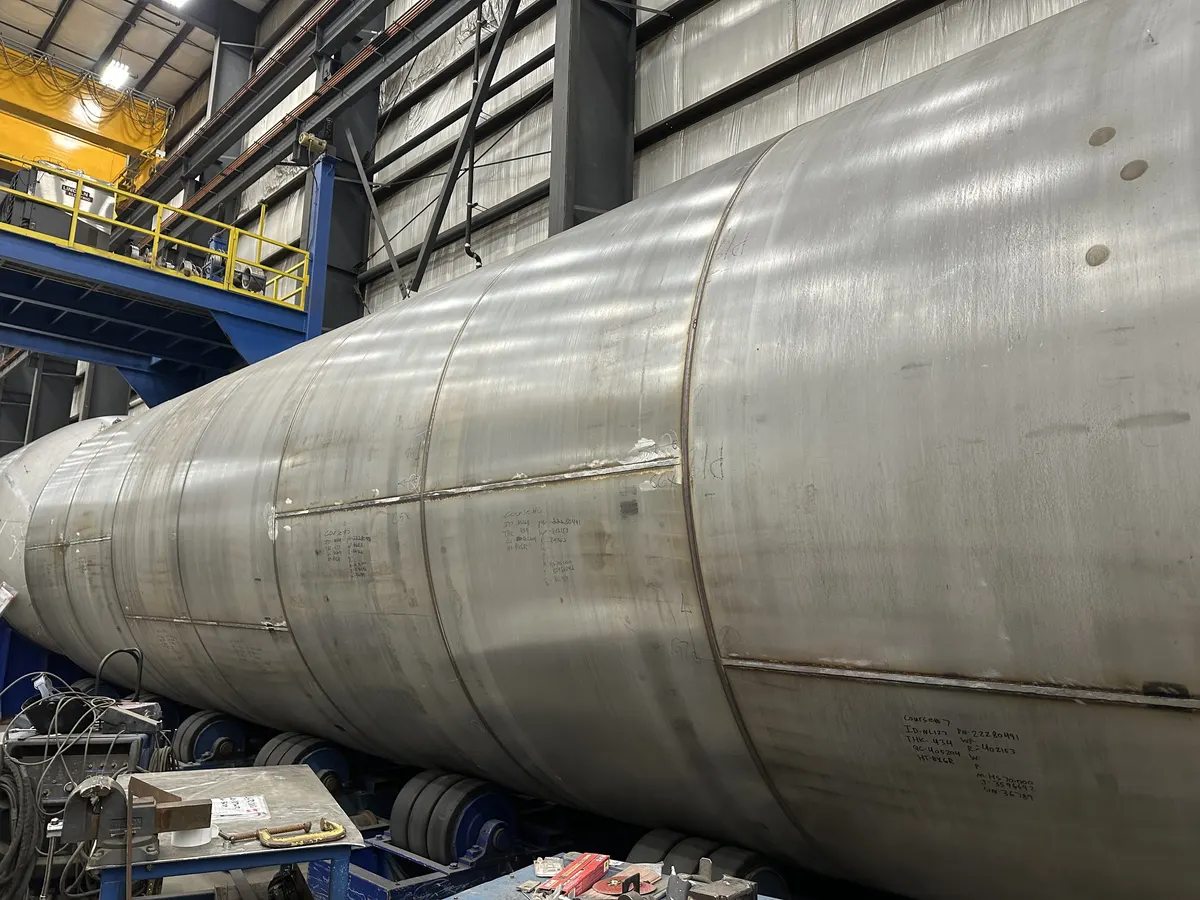
On a bullet-tank peak shaver the tanks are shop-fabricated and shipped, not field-erected, which makes the fabricator a distinct party from the EPC. At the Greenville Utilities project, Chart Industries fabricated the tanks and the pressurization system under license. On a project built that way, the EPC’s scope is the site itself: foundations, piping, vaporizers, controls, and the tie-in to the distribution system.
Total system fabrication time is currently 10 to 11 months. The EPC’s field schedule has to be built around the delivery date, which is one more reason the fabricator is selected in the same phase as the EPC rather than after it.
Where the technology licensor fits
GreenER™ Technology is licensed to qualified EPC contractors and system fabricators who want to build the patented design into their own LNG offerings. The licensor supplies the design basis and the site-specific configuration. It also qualifies the fabricator and supports commissioning. An EPC that holds a license can offer the package to its own utility clients. A utility that already has a preferred EPC can have the technology licensed to that firm instead. Either way the EPC still builds it. The license changes what gets built, not who builds it.
Construction oversight and commissioning
Phase four is the EPC’s phase to execute and the owner’s engineer’s phase to witness. Under 49 CFR 193.2303, no component may be placed in service until it passes the inspections and tests the rule and NFPA 59A prescribe. Someone on the owner’s side has to be present for those tests and read the results against the performance guarantee before signing the acceptance. That is performance verification. It is the difference between a plant that was built and a plant that was proven.
After commercial operation
Phase five is the handoff to the operator, with phased capacity growth and hydrogen or e-NG additions on the roadmap if the site was laid out for them. At Greenville, two of six 80,000-gallon tanks plus the pressurization system are in commercial operation, and the project reached that point in under 24 months and under budget. The EPC’s obligations end at acceptance. The developer’s interest in whether the plant performs does not, which is why the same partners who originated the deal are the ones standing there at commissioning.
How we fit
We work three ways: full-scope project development as owner’s engineer or design-build through commercial operation, project consulting for the assessment and board-ready advisory work, and co-investment capital where the project benefits from it. On the EPC question specifically, the value sits in phases two and three, while the scope is being frozen and the contractors chosen. Bring us in before the RFP goes out, not after the bids come back.
If you are an EPC weighing a license, or a utility deciding how to package a peak-shaving project, sign up for a Lunch & Learn or reach out directly.